

Dennis Vymer

Dennis Vymer

Founder of My Financial Freedom Tracker · Product Manager

Building the budgeting and FIRE tool I couldn't find anywhere else.

Czechia

My FIRE Philosophy

Five questions I get asked the most, answered honestly.

Financial independence, for me, isn't about retiring early. It's about buying back the ability to choose. The plan my wife and I run on is straightforward: save aggressively in our 20s and 30s — 40 to 60 percent of household income — so that by 40 we can pick what work looks like instead of having work picked for us by mortgages and bills.

The questions below come up nearly every time someone hears the savings rate. They cover the why behind Coast FIRE, the trade-offs we've made along the way, and what changed when our first child entered the picture. Some of the answers run against popular FIRE advice — that's intentional. The system has to be one I can hold for thirty years, not the highest possible peak in any single year.

Why aim for 40, and why not full FIRE then?

It's hard to predict how I'll think in seven years. If I were already at the finish line today, I'd probably move to 0.8 FTE on a 2+2 work pattern. And somewhere between 35 and 40, I'd love to teach math and physics at a high school near where I live — it's an undervalued profession that, done well, changes a lot of lives.

I'm not aiming for full FIRE at 40 for one straightforward reason: kids. Once they're 18+, my wife and I get a ten-year window of pure choice. Keep working for the biggest paycheck, just cover costs, or any mix in between depending on what the year demands. Coast FIRE to 50 buys that optionality.

Why Coast FIRE instead of classical FIRE?

Two reasons that reinforce each other. First, time plus compound interest is the most magical force in personal finance — front-loading aggressive saving in your 20s and 30s means the portfolio does the heavy lifting for the next twenty years whether you contribute or not.

Second, we haven't gotten used to luxury yet. No expensive holidays, no expensive cars, no lifestyle creep. Saving 40–60% feels normal because we never adjusted our spending to match our income. By 40 we'll have a real choice: money or peace, freely selectable depending on the kids, the year, anything. More or less, FIRE will already be there — it'll just look like lean FIRE.

How do you save 40–60% and still live normally?

Both my wife and I pushed hard to earn a big income early in our careers. The biggest unlock isn't a savings hack — it's that income grew while expenses stayed roughly the same. That gap is the savings rate.

My strongest advice to anyone in their 20s: forget the side-hustle hype for a minute and invest in yourself first. Skills, education, building things. The return is 10× anything the market will ever give you. Only once you've maxed your earning power does it make sense to start optimizing the savings rate.

Max return, or a system you can psychologically sustain?

Maximum return is always coupled with risk. Some people feel adrenaline from risk; I feel anxiety. So I optimize for a system I can hold for thirty years, not the highest possible peak in any single year. Day-trading, options, forex — I could go there. Why would I? I'm young, I have time, and time is the most magical variable in investing.

Boring global ETFs plus monthly contributions plus twenty years of compound interest beats almost anything I'd cook up trying to be clever. Crypto sits in a tiny corner of the portfolio under the label 'money I'm willing to fully lose.' I understand its appeal; I just don't see what value it actually adds.

What changed when you started expecting a family?

Two big shifts. First, we cut Wants aggressively — fewer fancy restaurant dates, fewer 'life improvement' purchases. We replaced them with smaller family outings, which actually fit our new chapter better anyway.

Second, I sat down one Saturday and audited every single Need we pay monthly: insurance, mandatory liability, electricity, gas, internet — every line, in detail. By re-shopping everything I freed up almost 4,000 CZK a month with zero lifestyle impact. That's the cheapest 4,000 CZK we'll ever earn.

Me and My Family

Everything in this plan exists for them. My wife is an equal partner in this — she leaned into FIRE with open hands the moment we sat down to actually talk about our finances together. We run one household, one shared account, with a tiny 'fun money' allowance each so neither of us has to justify a pedicure or extra RAM sticks.

With our first child on the way, the philosophy got sharper, not looser. Build the optionality now so that in fifteen years we have time, not just money.

Dennis and his family

Publications

Patents I co-authored and places I've been featured.

Featured On

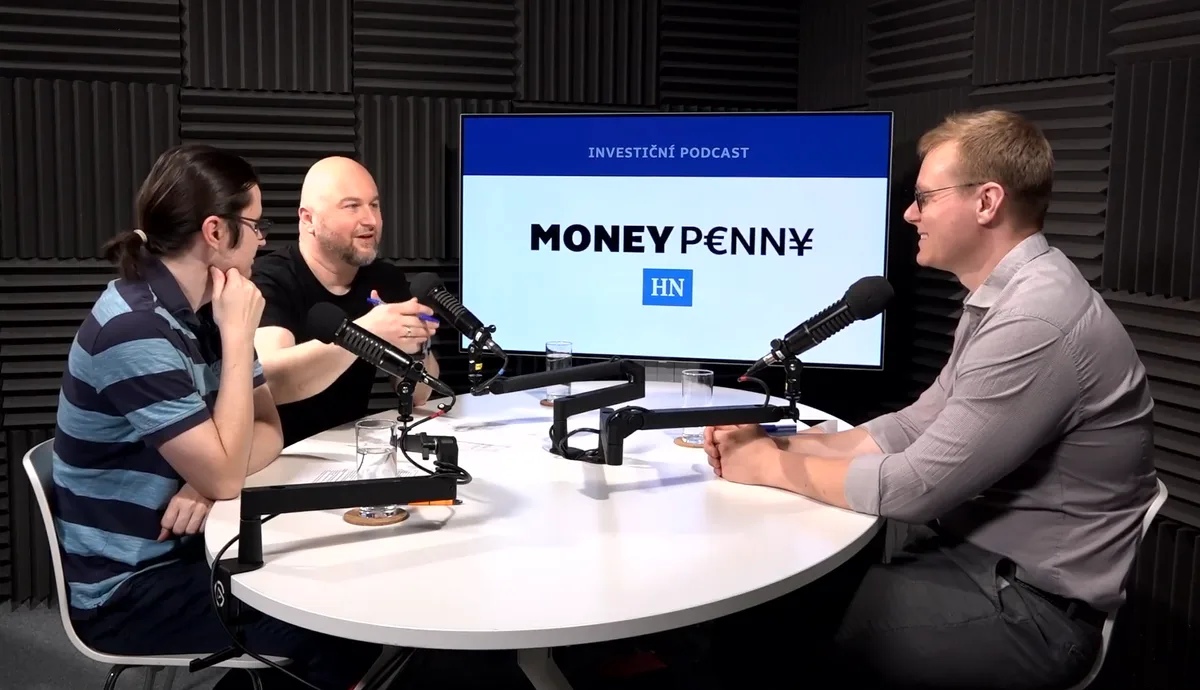
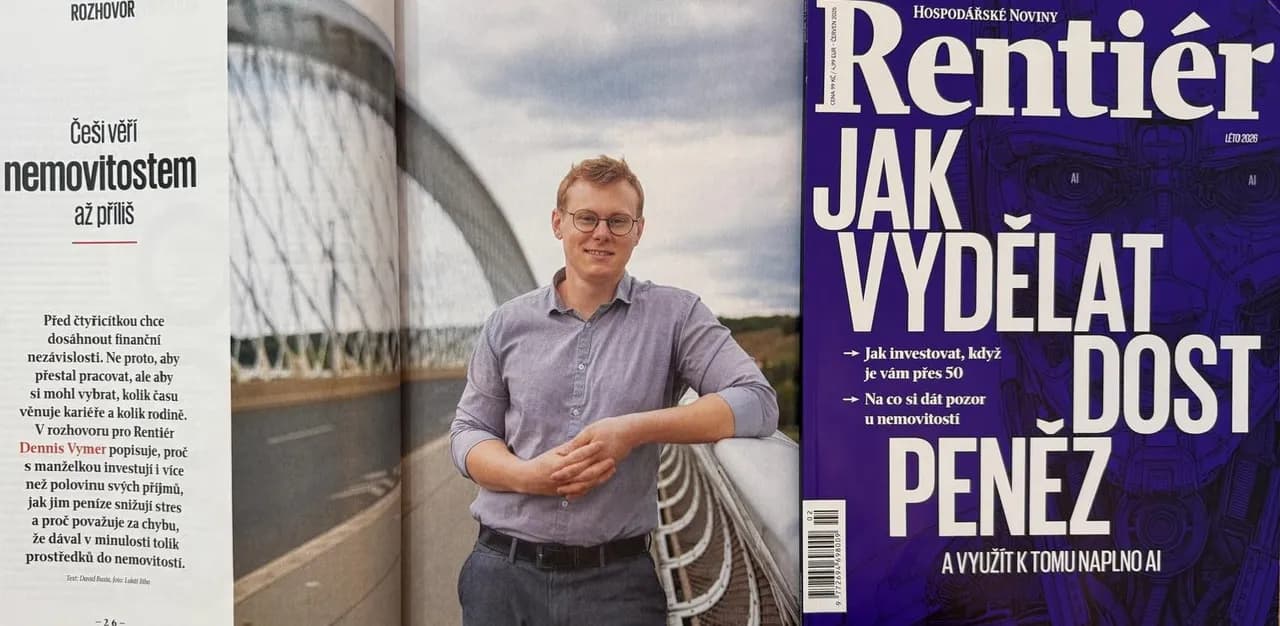
Podcasts and press appearances.

More coming soon.

US Patents

Co-authored during my time at Thermo Fisher Scientific — all in microscopy automation and digital-twin simulation.

My Background

I'm currently a Product Manager at Whalebone, leading product across three teams on the road to protecting one billion users through network-layer cybersecurity across 15+ countries. I own the roadmap, run discovery with telco customers, and balance long-term platform bets with fast-moving tactical priorities.

Before this I spent 5+ years at Thermo Fisher Scientific, growing from Software Engineer Intern to Staff Program Manager. I co-authored three US patents (see Publications), built a Digital Twin from scratch that saved $5M in capex and opex, and led the first-of-its-kind Vulcan Automated Lab — now the flagship product of Thermo Fisher's Semiconductor division.

Want what I built?

The same tool I use to track my own FIRE journey. Free to use, no data monetization.