Emergency Fund: How Many Months of Expenses Do You Need?
 Dennis Vymer
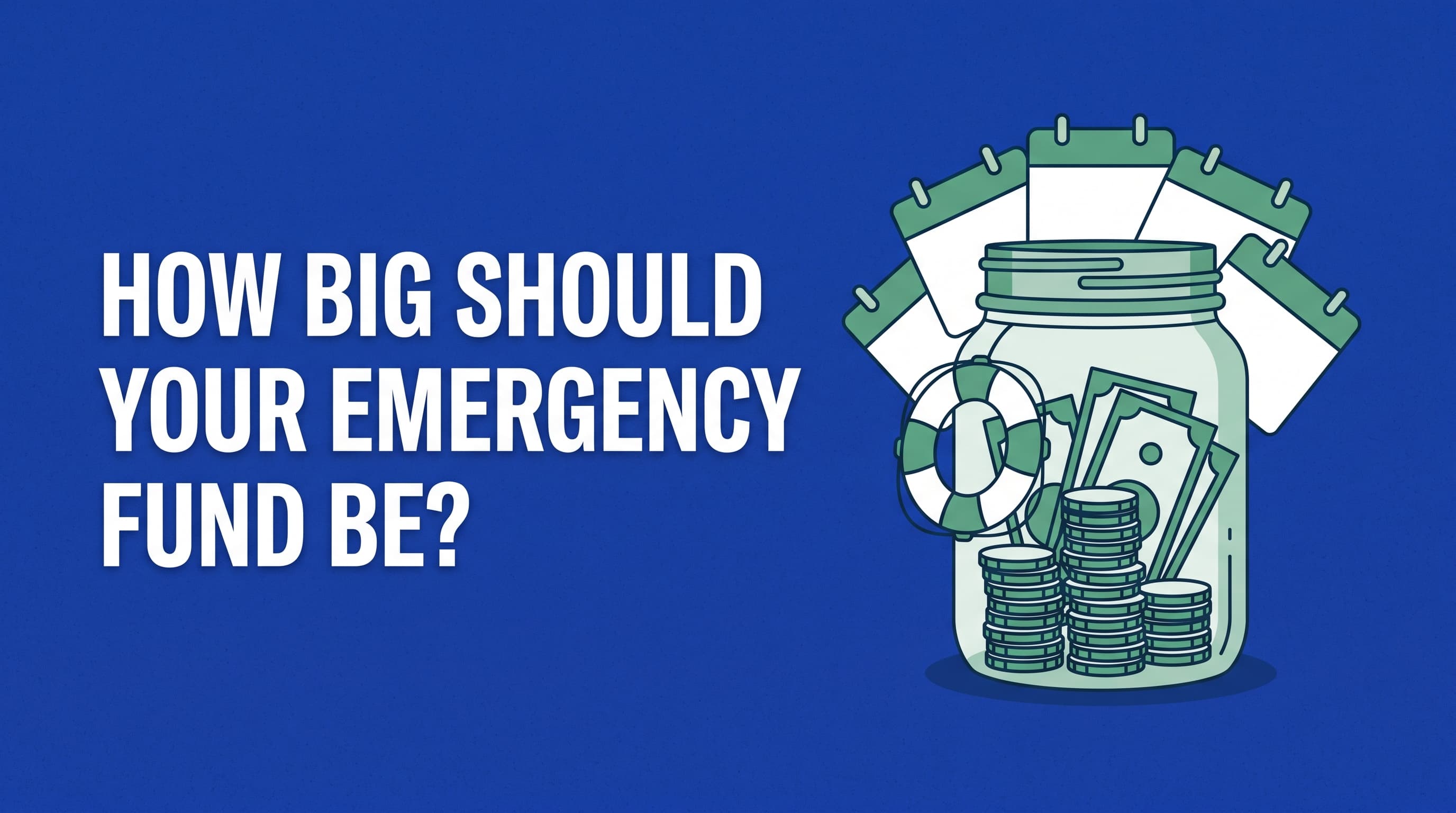
An emergency fund should cover 3 months of essential expenses if your income is steady and nobody else depends on it. Six months is the better default for most households, and 9 to 12 months makes sense if you're self-employed, living on one income, or work in a field where jobs take a long time to find.
"Essential" means the bills that keep coming after a paycheck stops: housing, food, utilities, insurance, transport and minimum debt payments, not your whole budget. Where you land in that range depends on how long it would take to replace your income. In September 2026 the median unemployed American had been looking for work for 11.5 weeks. The average was 24.8 weeks, and 27.1% had been out of work for more than six months. A fund sized for the 11.5-week median runs out about three months before the 24.8-week average.
How long job searches are lasting in 2026
Every month the US Bureau of Labor Statistics splits unemployed people by how long they've been searching. Counting each search as the time since the last paycheck shows which fund sizes would have held.
| Emergency fund covers | Searches that fit inside it (Sept 2026) | Searches already longer |
|---|---|---|
| About 1 month (under 5 weeks) | 29.2% | 70.8% |
| A little over 3 months (14 weeks) | 56.4% | 43.6% |
| 6 months (26 weeks) | 72.9% | 27.1% |
These are searches still in progress, so many of them will run longer before they end, and the shares in the right-hand column can only grow.
A three-month fund would already have run dry for more than four in ten of these people, and six months covers roughly three in four. The share out of work for more than six months rose from 23.6% a year earlier, and the September 2026 jobs report put the long-term unemployed at 1.9 million people.
 Data: US Bureau of Labor Statistics, Table A-12, September 2026, seasonally adjusted.
Pick your number by situation
Job loss is usually the most expensive emergency, so let it set the size, then adjust for how exposed your household's income is:
| Your situation | Months of essential expenses |
|---|---|
| One steady income and no dependants, or two steady incomes in different industries | 3 |
| One income, or a household with kids | 6 |
| Two incomes from the same employer or the same industry | 6 (they can fail together) |
| Self-employed, commission, contract or freelance income | 6 to 12 |
| One income supporting a family, a niche job, or a career change coming | 9 to 12 |
Multiply the row by your monthly essentials. If they run $3,000 a month, three months is $9,000, six months is $18,000 and twelve months is $36,000.
For the monthly figure, pull your last three months of statements, add up only the essential categories and take the average, because a figure guessed from memory usually comes out low. If you already track spending by category, in a spreadsheet or a free budget tracker like My Financial Freedom Tracker (disclosure: I build it), the three-month average per category is already there to add up.
Expected costs don't belong in this figure either. The annual insurance bill, Christmas, the car's next set of tyres: those go in separate sinking funds, so the December bills don't drain the emergency fund.
What is the average emergency fund?
In Bankrate's 2026 Emergency Savings Report, published in February 2026, 54% of US adults had less than three months of expenses saved (this question was asked in May 2025):
| Emergency savings | Share of US adults |
|---|---|
| None | 24% |
| Some, but under 3 months of expenses | 30% |
| 3 to 5 months | 19% |
| 6 months or more | 27% |
The same survey found that 85% of people say they'd need at least three months saved to feel comfortable, but only 46% have it. In the same report, 47% said they had enough cash or access to funds to cover a $1,000 emergency. The Federal Reserve asks a smaller version of the question: in its 2025 household survey, 63% of adults said they would cover a surprise $400 expense with cash or its equivalent.
One month saved puts you ahead of the 24% with nothing and level with the 30% holding under three months. Against the BLS table, one month would cover only the 29.2% of job searches shorter than five weeks.
Start with a first target you can hit
From zero, six months of essentials ($18,000 at $3,000 a month) is a long way off, so build it in four steps:
- $500. Bankrate's own suggestion for a first goal, enough to keep a small surprise bill off a credit card.
- $2,000. Vanguard surveyed more than 12,400 of its investors and found people with at least $2,000 of emergency savings reported 21% higher financial well-being than people with none, while having three to six months saved was linked to 13% higher well-being.
- One month of essentials. $3,000 in the example above, enough to pay one month of bills while you look for work.
- Your full number from the table above.
Set the transfer to run automatically on payday. If you don't know where the money for the transfer will come from, that's a budgeting question first; how to start a budget covers it.
Where should you keep your emergency fund?
In an instant-access savings account at an insured bank. Ideally not the same bank as your everyday account, so it's one step further from impulse spending but still reachable the same day.
As of October 6, 2026, leading high-yield savings accounts paid between 4.25% and 5.00% APY, while the national average savings rate was 0.37%. On an $18,000 fund that's about $765 a year at 4.25% against about $67 at the average rate, about $700 a year more from an account with the same deposit insurance and same-day access. Watch the headline rates, though: the 5.00% at the top of that list was a six-month offer for new customers, not a rate you keep.
Check the deposit insurance before chasing the last tenth of a percent. In the US the FDIC insures up to $250,000 for each depositor at each insured bank, separately for each ownership category. In the EU, national deposit guarantee schemes cover up to €100,000. Staying under those limits keeps a bank failure from freezing the money while claims are paid out.
Where not to keep it: in stocks, in a bond fund, or "available" on a credit line. All three tend to fail at the same moment the emergency arrives, because recessions bring both job losses and falling markets, and banks cut credit lines when they get nervous. Check your brokerage account too. Cash left there often sits in a sweep account paying very little (more on that in the cash sweep trap).
Emergency fund or investing first?
Build the starter fund first, the $2,000 or one month of essentials, then split new savings between the full emergency fund and investing.
Over almost any long stretch a world index fund beats a savings account, but without cash to fall back on, a job loss during a downturn forces you to sell shares exactly when they're cheapest, and that one forced sale can cost more than years of the interest you gave up by holding cash. More on that in what to do when markets crash.
If you carry high-interest debt, the order changes. Bankrate found 29% of Americans carry more credit card debt than emergency savings. If that's you, keep the starter fund so the next surprise doesn't land on the card again, and send the rest at the debt; the free debt snowball vs avalanche calculator shows which balance to clear first and when you'd be debt-free.
When is an emergency fund too big?
When it holds more than the row for your situation and you can't name the risk the extra months cover. Going past six months can still make sense: a six-month fund would not have covered the 27.1% of searches in the table above that had already run longer. The case for keeping an emergency fund bigger than the rule on purpose covers that trade-off in detail.
Every month of expenses beyond your row earns savings-account interest instead of market returns, year after year. If you do hold extra, check the fund once a year against what you actually spent, because expenses drift, and save for big wants in a separate account so the emergency fund doesn't turn into the holiday fund.
Pull three months of statements, total the essential lines, average them and multiply by the row for your household. Then set up the payday transfer and put the yearly check in your calendar.
Frequently asked questions
- Is 3 months of emergency fund enough?
- Three months of essential expenses is enough for a household with two steady incomes in different industries. For most others it's thin: in September 2026, 43.6% of unemployed Americans had already been searching longer than 14 weeks, and 27.1% longer than six months (BLS). One income, kids, or irregular pay are all reasons to aim for six months or more.
- What is the average emergency fund?
- Most people hold less than three months of expenses. In Bankrate's survey, 24% of US adults had no emergency savings, 30% had under three months, 19% had three to five months and 27% had six months or more. The Federal Reserve found 63% of adults would cover a surprise $400 expense with cash or its equivalent.
- Where should I keep my emergency fund?
- In an instant-access savings account at an insured bank, ideally separate from your everyday account. In October 2026 leading high-yield accounts paid 4.25% to 5.00% APY against a 0.37% national average, so shopping the rate matters. Avoid stocks, bond funds and credit lines: they tend to fail at the same moment the emergency arrives.
- Is a 12-month emergency fund too much?
- Not if your income is irregular, your household runs on one salary, or your field has long job searches. It does have a cost: every extra month earns savings interest instead of market returns. If you hold twelve months, check the amount once a year against actual spending and keep saving for big purchases separately, so the fund stays an emergency fund.
Free Financial Tools
Stay updated
Get notified when we publish new articles.
Related posts
Lifestyle Creep Examples and What They Cost Your FI Date
Seven everyday lifestyle creep examples, priced in years. Spend a whole raise and you can reach financial independence later than if you never got it.
Income Concentration Risk: Your Job Is Your Biggest Position
Your salary is the biggest undiversified position you own: one employer, one country, one currency. What actually reduces income concentration risk.
How to Stop Fighting About Money in a Relationship
Half of couples avoid money talks to keep the peace. Talking more isn't the fix: closing the open decisions is, so the check-in has nothing to fight over.